 "
"
What you need to know about radon!
25 March 2015
What is radon?
Radon is a natural occurring noble gas formed as an indirect decay of uranium. We cannot see it, taste it or smell it, but it could be in our homes.
Where can it be found?
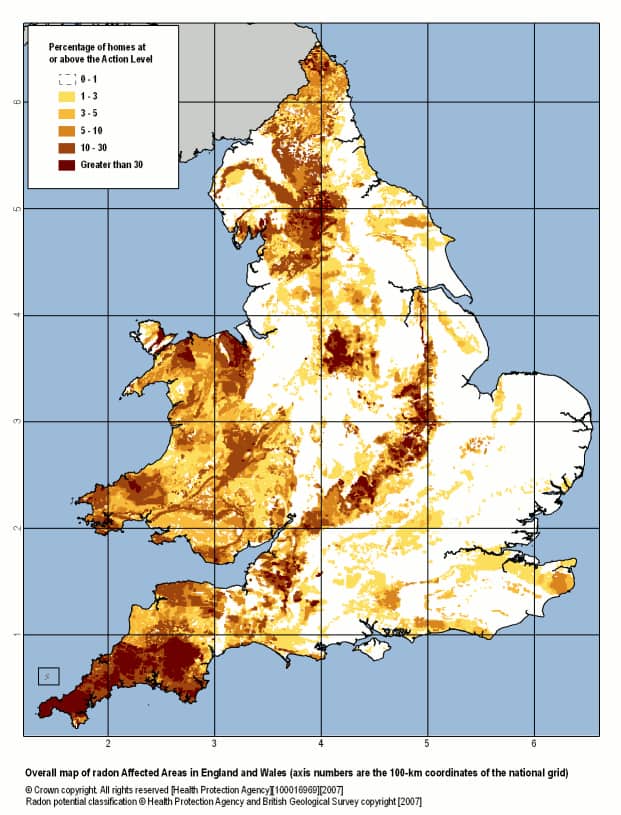
The amount of gas released varies depending on your geographical area; it is more likely to be found in regions where the geology features concentrations of granite and limestone. In the open air, radon levels are low however it can seep through cracks and holes in the foundations of our home, where it can build up to dangerous levels.
Below is a map showing the concentration of radon gas in the UK. The darker the shade of brown on the map, the more chance that area is subject to high levels of radon gas. Radon is measured in becquerels per metre cubed, the government target level for radon in homes is 100 becquerels per metre cubed whilst the action level is 200 becquerels per metre cubed.
What are the health risks?
Radon produces a radioactive dust in the air which we breathe. When radon is inhaled it sticks to the lining of our lungs, emitting a radiation that can often lead to lung cancer. Researchers conclude that radon in homes causes approximately 20,000 lung cancer deaths in the European Union each year, about 1,000 of which are in the United Kingdom.
How can I reduce my risk?
Due to us not being able to see smell or taste radon, it is vital that we are take precautions and investigate the levels in our homes.
To find out if your property has significantly high levels of radon, diagnostics need to be ensued. Radon detectors are placed within sleeping and living areas within your property throughout a three month period. This allows us to see fluctuations according to seasonal temperatures. These detectors are then sent to a laboratory for further analysis.
Effective means of reducing radon levels.
Improving ventilation will inevitably reduce radon levels. This can be accomplished through under-floor extract, mini sumps and
positive pressure ventilation systems. In terms of effectiveness under-floor extract and mini sumps can reduce radon by 90%, while positive pressure ventilation systems decrease it by 50 to 60%. Sealing floors and walls can reduce the presence of radon by up to 50% and so are suitable for controlling low levels.
When dealing with such a serious issue as radon gas, it is always best to leave it the specialists. With our experience and knowledge in property preservation you can be confident your property is in safe hands . For more help on radon gas please check out our website or feel free to give us a call on 0800 288 8660.