 "
"

Common Problems in New Build Houses That Can Lead to Property Care Issues
30 August 2024
Throughout the UK there are new homes being built that people are moving into every day, and on every new build estate there are going to be properties which have been built with some snags.
Snags are always a pain to find, and after the stress of buying a house and moving in getting small problems sorted can fall by the wayside simply because you’re exhausted from the move. However, if ignored these snags can lead to much bigger problems in the future, which can rack up extensive repair bills.
So, what snags in new builds can lead to potential property care issues if left ignored?
Questions About Property Care?
Bad Pointing

One of the most common problems that people report when it comes to a new build property is that the pointing isn’t correct.
Pointing is incredibly important. It’s the finishing of the mortar between the brickwork of a building, and if done correctly not only will it protect the mortar from the effects of weathering, but also keep the property looking nice, improving the kerb appeal.
From a purely practical perspective, good pointing protects a buildings mortar from the effects of weathering, and in the long run prevents penetrating damp from setting in to your exterior facing walls.
It happens in a few different ways, one being in the winter. Rain can get into the mortar, and then in the cold that same moisture freezes. When the moisture in the mortar freezes, it expands, and in turn erodes some of the mortar in the joint. Over time, this can easily compromise your properties walls, and eventually turn into a penetrating damp problem on the inside of your house, with rain water soaking through your walls giving black mould spores a potentially perfect place to grow and spread.
Make sure that if you suspect bad pointing in your property you immediately flag it on a snag list, otherwise over time the issue could get worse and worse.
Talk To Us About Damp Proofing
Bad Vents
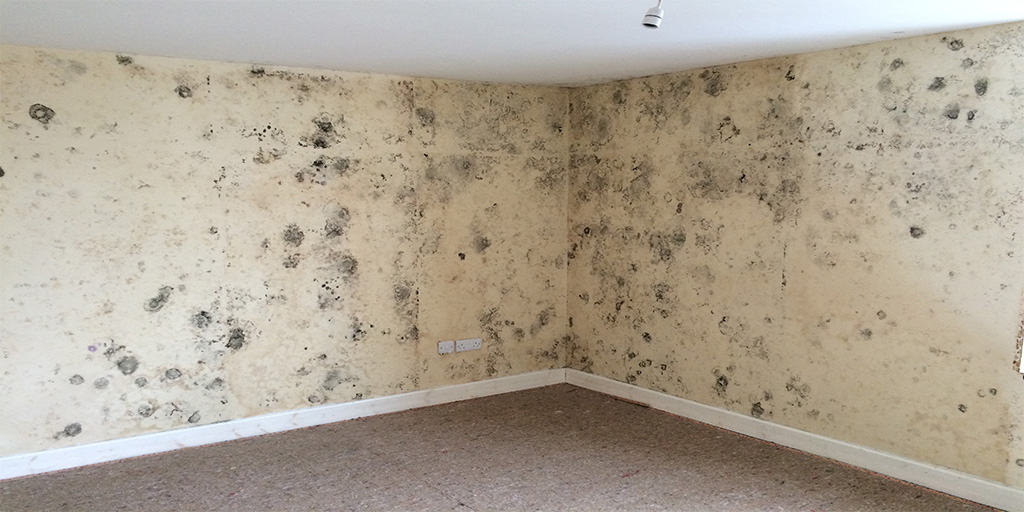
A badly installed or blocked vent might not seem like an immediate problem – and it might not be something you notice right away.
Ventilation however, is one of the most important factors in a home, as it helps to control the condensation levels and stop that same condensation from building up and potentially causing black mould to spread through the property.
However, it might not be immediately noticeable to you that your vents aren’t installed correctly. It might only be in winter when you have the heating on that the condensation begins in earnest, and if you moved in the summer you could be past the snag list submission period.
In short, it’s going to be well worth your time making sure that all of your vents, extraction fans, and air bricks have been installed correctly. This could be as simple as having a look through them and making sure that they aren’t blocked up, and that the path for air to move out of the property is clear.
Make sure than any extraction fans installed in the bathroom or kitchen are working correctly, that they turn on and off as needed, and that they do in fact extract the humid air outside properly.
Making sure your ventilation is up to scratch and working as intended is going to be a significant step in reducing the condensation made in your property, and act as a major counter to the onset of condensation based damp and the spread of black mould.
For Expert Advice Talk To Our Team
Improperly Installed Roofing
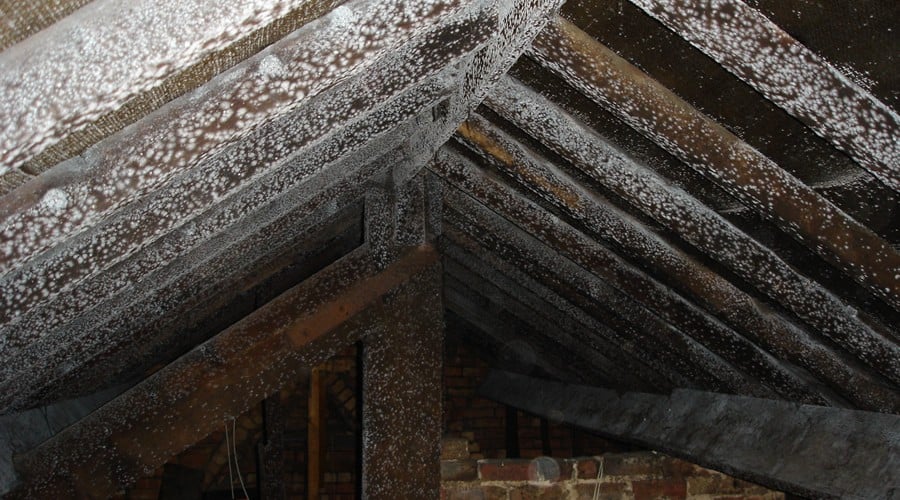
Roof tiles and the lining underneath are vital, and any kind of bad job on the roof of your new build is only going to lead to a leak, which is in turn is going to put your loft at risk of developing damp and timber rot issues in the long run.
Too often roof leaks are reported as one of the major issues in new build homes, and if they aren’t reported as part of the snagging, you could be on the hook for not just a costly roofing repair bill, but also the cost to repair any of the timber in the loft that could have been damaged as a result.
Even a small leak in a roof can expose timber to the potential of dry and wet rot.
Rot is, at it’s core, a type of fungus that lives on excess moisture present within timber. The main difference between wet rot and dry rot isn’t the actual presence of moisture, it’s actually the difference in the amount of excess moisture in the timber, meaning that were the timber to sit underneath even a slow drip thanks to a broken roof tile, your open to timber rot.
Make sure that your roof isn’t prone to leaks either by checking after rain, or by having a professional survey done to ensure that you aren’t vulnerable to long term problems associated with water ingress.
For Hel pWith Damp In Your Loft...
Poor Insulation
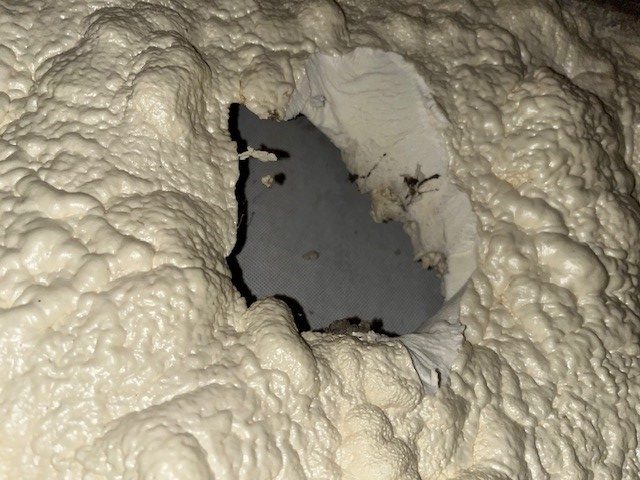
Another common problem related to new build loft spaces is the presence of poor or wrongly installed insulation.
Insulation is incredibly important when it comes to thermal retention, but it’s also instrumental in helping reduce the amount of condensation your property generates – especially in the colder months when maintaining a consistent temperature in your house is important.
If your insulation isn’t up to scratch then its very likely that you are going to lose a lot of warm air through the ceiling, or through your walls if the property makes use of cavity wall insulation.
Of course, this opens up the possibility of what’s called interstitial condensation. You can read more about what interstitial condensation is here, but summed up it’s when condensation occurs within the cavity of a wall or within the cavity below the boards in a loft, soaking into the insulation and rendering it useless, damp, and a potential nest for black mould growth.
That’s only one possibility as well. Poor insulation can lead to an overall increase in the amount of condensation throughout your property, which is only going to lead to the ideal breeding grounds for black mould.
Making sure your insulation is performing as it should is an important thing to make sure of after you move in. Again, a surveyor can help you learn more, but putting your insulation onto the snag list if needed is going to save you a lot of hassle and potentially money too in the long run.
For Assistance With Condensation
Bad Guttering

Gutters might seem like something simple and easy to ignore, but if they are installed incorrectly they can lead to some pretty serious damp problems.
Penetrating damp is a form of damp that occurs when there is a fault with the property which allows water ingress. This means that (for example) if you have gutters which are overflowing, leaking, or simply not draining correctly, then the presence of that leaking rainwater down the side of your property can evolve quickly into a damp problem, ruining your brickwork and even features inside the property, like wallpaper, plasterboard, and anything else that might be fixed to the area developing a damp problem.
So, make sure that your gutters and drains are all working correctly to stop damp from setting in, and opening your property up to long term associated problems like mould and rot.
If you suspect that your new build might have some snags linked to property care, then our surveyors can help. Just give us a call to arrange a survey, and we can let you know if any areas of your property need attention.