 "
"
What Is the Best Way to Damp Proof a Cellar?
11 February 2025
Finding damp in any part of a property you own is never going to be happy news. That goes doubly so for a cellar, as these below-ground spaces can often promise so much in the way of potential, but a lingering damp problem can scuttle all of your plans thanks to the lack of ventilation and difficulty of tackling the damp problem.
So, below you can find a step by step guide on the best way to keep your cellar damp-proof and usable throughout the year, and long into the future.
Establish the Source of the Damp
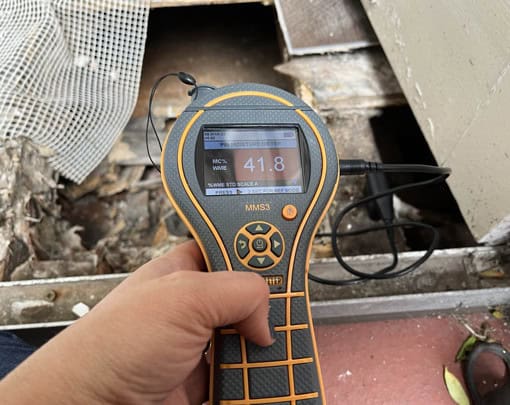
Damp proofing can be a tricky job, especially when below-ground structures are concerned. That’s because it can be incredibly difficult to determine the cause of damp when the entirety of the structure is surrounded by either the ground (which is prone to retaining moisture), or a neighbouring cellar.
In many cases, the reason for damp in your cellar is going to be down to a form of flooding, rather than the more common culprits of penetrating damp, rising damp, or condensation that are normally found above ground.
This doesn’t have to mean an ankle-deep pool appearing every morning.
It could be that the ground around your cellar has taken on plenty of water during recent rainfall, and has become saturated. Because the ground has become saturated and expanded, the resulting pressure may have caused cracks and faults to appear in your cellar walls, through which moisture can easily leak through.
Or, maybe your cellar floor is sat below the water table, and because of a lack of any comprehensive waterproofing being installed at the time of the properties construction, your cellar floor routinely gets damp, and no amount of drying or dehumidifiers will help the problem.
The problem could even be a lot more modern. Maybe a burst pipe in a shared wall with a neighbour has caused a serious case of penetrating damp, or a blocked drain has led to your external cellar walls becoming compromised and allowing water to easily leak into your cellar.
In any case, it’s going to be difficult for someone not properly trained in waterproofing to properly identify the cause of damp in the cellar as there are so many possibilities. By booking a survey with a qualified expert you are going to get a clear picture of not only where the flood water is coming from, but also on the recommended steps needed to put a stop to the damp in your cellar entirely.
Looking To Damp Proof Your Cellar?
Stop Any Moisture from Building Up
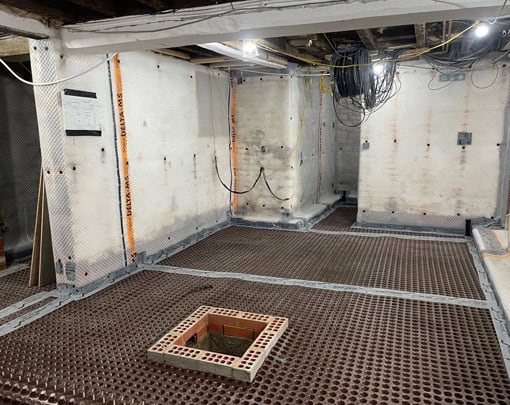
In certain circumstances, damp in a basement can be the result of condensation over anything else. If this is the case in your cellar, a qualified surveyor will be able to let you know, as well as suggest some potential ways in which condensation can be reduced.
The key thing to know about condensation based damp is that if it’s not controlled properly, it can lead to serious black mould problems. The trick to controlling the condensation is ventilation.
Ensuring that there is some kind of ventilation in your basement is vital if you want to eliminate condensation based problems.
Condensation is just warm, moist air, coming into contact with a cooler surface. Normally this happens in rooms where there is no consistent heating, or in bathrooms and kitchens where plenty of heat is generated.
Condensation in a cellar is often created because the cellar is, for example, heated, and then that heated air comes into contact with a cool exterior facing wall. The warm air condenses, and over time allows black mould to grow.
By allowing for ventilation, either through opening available windows, keeping doors open to allow for a through breeze, or by installing a positive pressure unit, you can drastically reduce or even eliminate the condensation problems in your basement.
Install Proper Cellar Waterproofing
In many cases damp in a cellar is going to persist as long as there is a way for floodwater to enter the cellar itself.
So, to keep your cellar free of damp, floods, and any resulting mould, you will have to explore basement waterproofing options.
Luckily, the methods of cellar waterproofing recognised by modern authorities (laid out in BS8102:2022) are both non-invasive, and very quick and easy to install.
The first recognised method of basement waterproofing is referred to as Type A Waterproofing, but it’s more commonly known as tanking, or cellar tanking. Tanking is the process of applying a waterproof slurry to your cellar walls, so that any would be floodwater cannot actually enter your cellar at all.
This is an easy and quick waterproofing solution to apply, and can be done very quickly. However, BS8102:2022 regulations stipulate that any below ground structure (including cellars) are protected by at least two forms of recognised waterproofing.
Now, Type B Waterproofing is defined as when a property is built out of waterproof materials, and because plenty of properties in the UK that are fitted with a basement are older, Type B Waterproofing isn’t installed, and it isn’t an option.
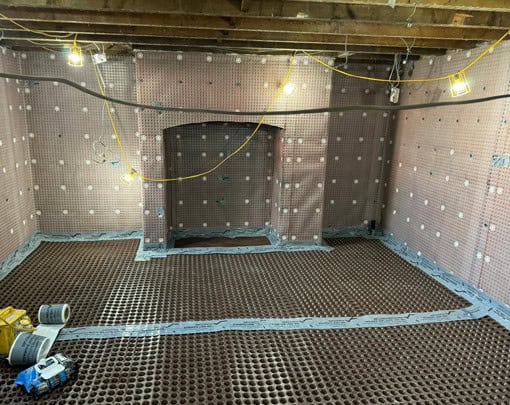
That leaves Type C Waterproofing, which is more commonly known as a cavity membrane, or cavity drainage system.
These cavity drainage systems are quick and easy to install in any cellar. A waterproof membrane is affixed to the walls and floor of the cellar, through which no moisture can travel. So, with the moisture trapped behind the membrane, the only place it can travel to is into a perimeter drainage channel, also placed behind the membrane, and installed to channel water into a sump pump.
The sump pump collects all of this would be floodwater, before it safely ejects it out of your cellar, leaving it completely dry and habitable all year round.
Cavity drainage systems are increasingly common, quick to install, and often used in conjunction with cellar tanking to bring older basements and cellars in line with modern British waterproofing standards.
Cavity drainage systems can have plasterboard and flooring placed on top of it without reducing its efficiency, making it a quick and easy way to turn any cellar into a usable space, whilst at the same time removing the chance of any sign of damp returning.
Book a Survey With a Waterproofing Expert Today.
Keep Up a Regular Maintenance Schedule
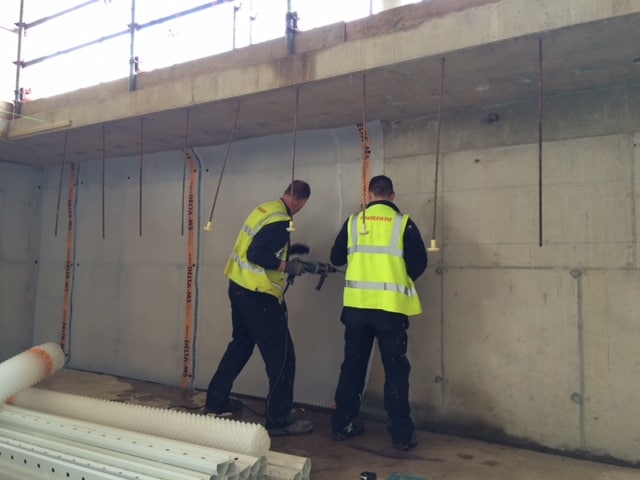
Once you have a waterproofing system in place in your cellar, it’s important that you make sure it stays functional and working.
This might sound like a hard task, but in practice, all it might amount to would be a routine visit from an engineer to check on the health of the sump pump, and that might be it. You can arrange this through our sister company, the Basement Sump & Pump Company, who can help you with annual services as needed.
Otherwise, once installed, you will be able to enjoy a fully usable and protected basement, safe in the knowledge that damp and mould aren’t going to return as long as your waterproofing system remains in use.
For more information on damp in cellars, or on how we can help you with cellar waterproofing and damp proofing, just call 0800 288 8660, or fill in one of our online contact forms.
Looking to Damp Proof your Cellar?